
The Measurable Impact Military Reunions have on Mental Health
For decades, military reunions have quietly played a powerful role in the lives of veterans. Those who attend often describe them as life-changing, healing, and deeply meaningful. Until recently, most of this understanding has been anecdotal.
The Military Reunion Network set out to change that by conducting a large-scale survey examining the Impact of Military Reunions on Veteran Mental Health. With responses from more than 900 participants, this research offers one of the most comprehensive looks at the emotional, psychological, and social benefits of reunions.
The results confirm what veterans, reunion planners, and partners have long believed:
Military reunions are not just social gatherings — they are a vital tool for reconnection, belonging, and emotional well-being.
Who Responded to the Survey
The strength of any research lies in who participates. In this case, the responses overwhelmingly came from the people who matter most — veterans themselves.
An impressive 94.5% of respondents served in the military, ensuring the findings reflect lived experience rather than outside perception.
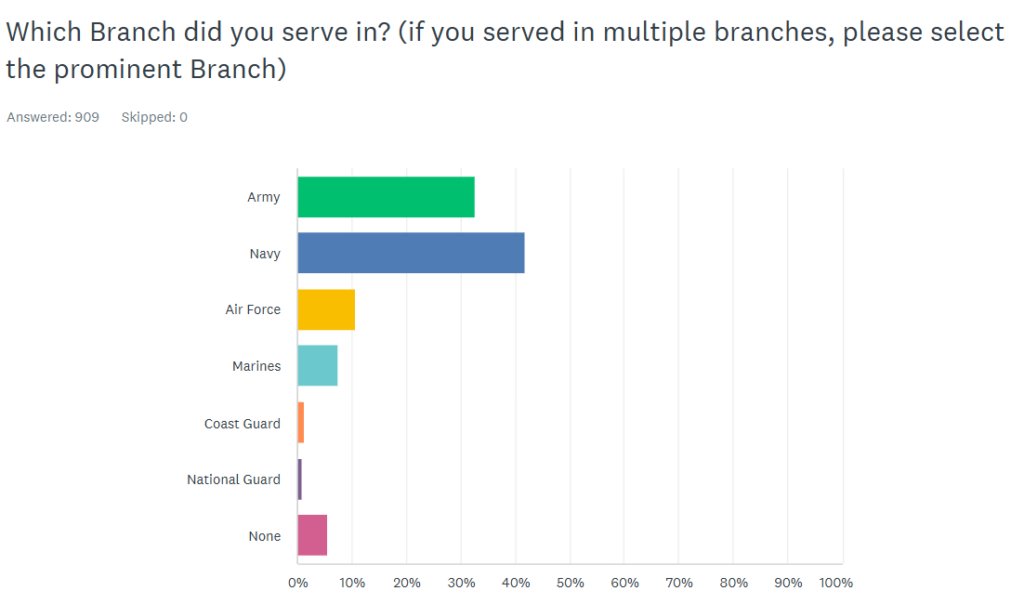
Branch representation included:
• Navy: 41.7%
• Army: 32.7%
• Air Force: 10.7%
• Marines: 7.4%
• Coast Guard & National Guard: ~2%
Despite differences in service branch, era, and role, the emotional themes were remarkably consistent across the entire data set.
The positive impact of reunions is universal across the veteran experience.
Reunions Are Not Occasional Events — They Are Part of Veteran Life
Reunions are not rare, one-time nostalgic events. They are recurring milestones that remain meaningful throughout veterans’ lives.
• 35.9% attended 2–3 reunions in the past five years
• 37.1% attended 4–5 reunions in the past five years
• Only 3.3% expressed no interest
Reunions become anchor points veterans plan around and look forward to year after year.
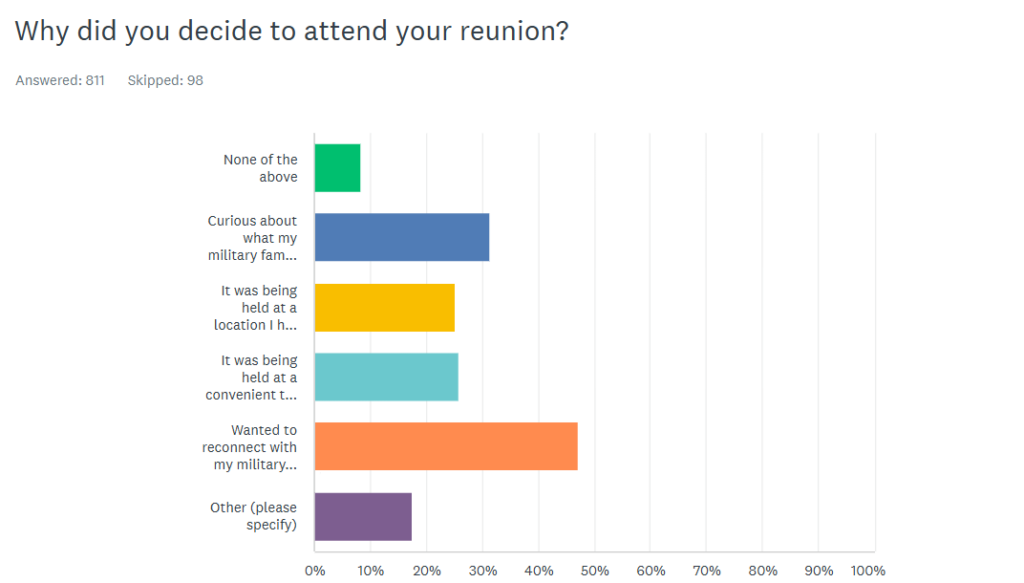
The #1 Reason Veterans Attend: Reconnection
Nearly half of respondents — 47.1% — attend reunions primarily to reconnect with their military family.
While travel and convenience matter, the data is clear:
People are the reason veterans attend reunions.
The bonds formed during service are built through shared hardship, shared purpose, and shared responsibility. Veterans are not attending reunions to revisit the past — they are attending to reconnect with the people who shaped their lives.
Camaraderie Is the Core Experience
Veterans consistently described reunions as spaces where they feel:
• Understood without explanation
• Accepted without judgment
• Connected through shared history
• Re-energized by shared identity
Common phrases included:
• “I belong again.”
• “We speak the same language.”
• “Spiritually uplifting.”
Reunions provide something many veterans struggle to find after leaving service:
A place where they simply belong.
Reunions Improve Mental Health
When asked directly whether reunions affect mental health, the response was overwhelmingly positive.
Veterans reported:
• Reduced isolation
• Increased emotional support
• Renewed pride in service
• Emotional healing and validation
One veteran summarized it perfectly:
“It improved my mental health knowing what I’m going through is not unique to me.”
The Benefits Extend Long After the Reunion Ends
Reunions are not temporary emotional boosts. They create lasting communication networks that continue long after the event ends.
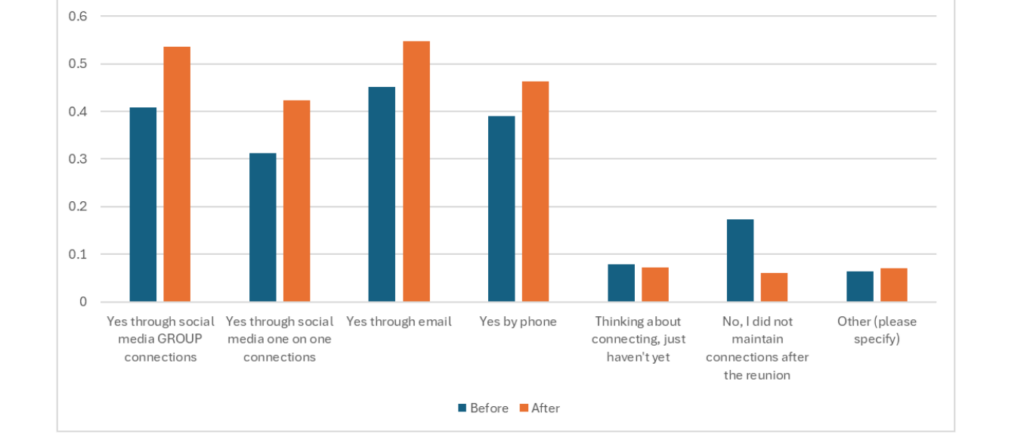
Disconnection Drops Dramatically
Before reunions, 17.34% had no connection with their military family.
After reunions, only 6.10% reported no continued connection — a 65% reduction in disconnection.
Communication Grows Across Every Channel
Every communication method increased after reunions:
• Email: 45.21% → 54.79%
• Social media groups: 40.78% → 53.54%
• One-on-one social media: 31.21% → 42.30%
• Phone calls: 38.97% → 46.32%
Reunions transform occasional contact into year-round connection.
Social Connection: A Critical Protective Factor
One of the most important implications of these findings is what they mean beyond the reunion itself.
Social connection is one of the strongest protective factors against suicide.
Research consistently shows that isolation and loneliness increase suicide risk, while belonging and peer support reduce it. This is especially important for veterans transitioning from the built-in support systems of military life.
Military reunions directly address this gap.
By rebuilding communication networks and rekindling relationships, reunions strengthen a known protective factor in veteran well-being: connection.
The survey showed dramatic increases in ongoing communication after reunions. This represents the rebuilding of a peer support network.
Reunions reconnect veterans with people who:
• Share their experiences
• Speak their language
• Understand their service
• Provide natural peer support
In practical terms, reunions help ensure fewer veterans feel alone.
Belonging Is a Powerful Form of Support
Many veterans described reunions as restoring belonging, purpose, and emotional relief.
When veterans feel connected and understood, they are more likely to check in with each other, share openly, and provide support during difficult times.
Reunions create environments where these connections form naturally and continue long after the event ends.
Veterans Want More Reunions
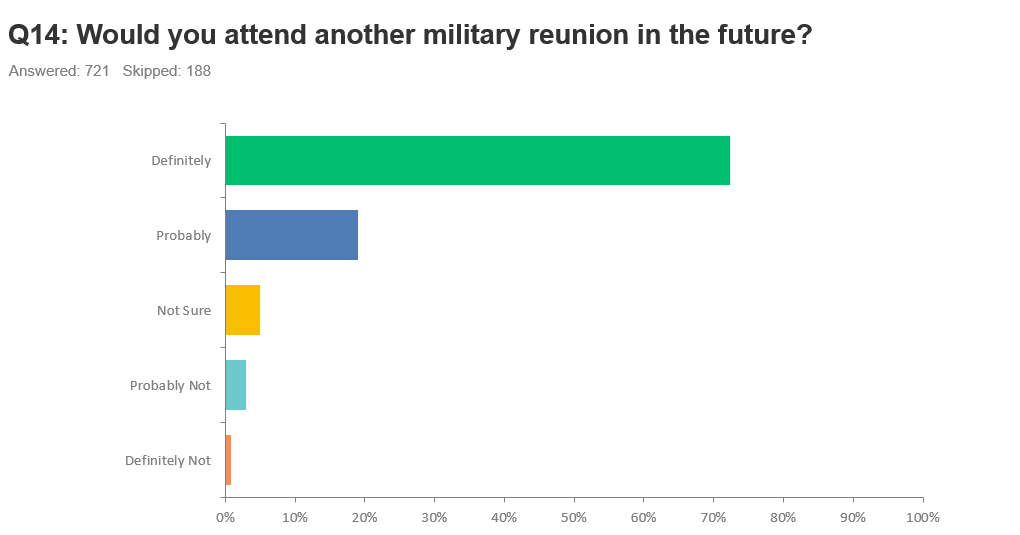
91% of veterans said they would attend another reunion.
• 72.3% definitely
• 19% probably
Reunions are not optional. They are essential.
The Bottom Line
Military reunions are far more than nostalgic gatherings.
They are powerful, peer-driven support systems that reduce isolation, rebuild connection, and strengthen a critical protective factor in veteran well-being: social connection.
They reconnect veterans with the people who understand them best — and that connection changes lives.
